

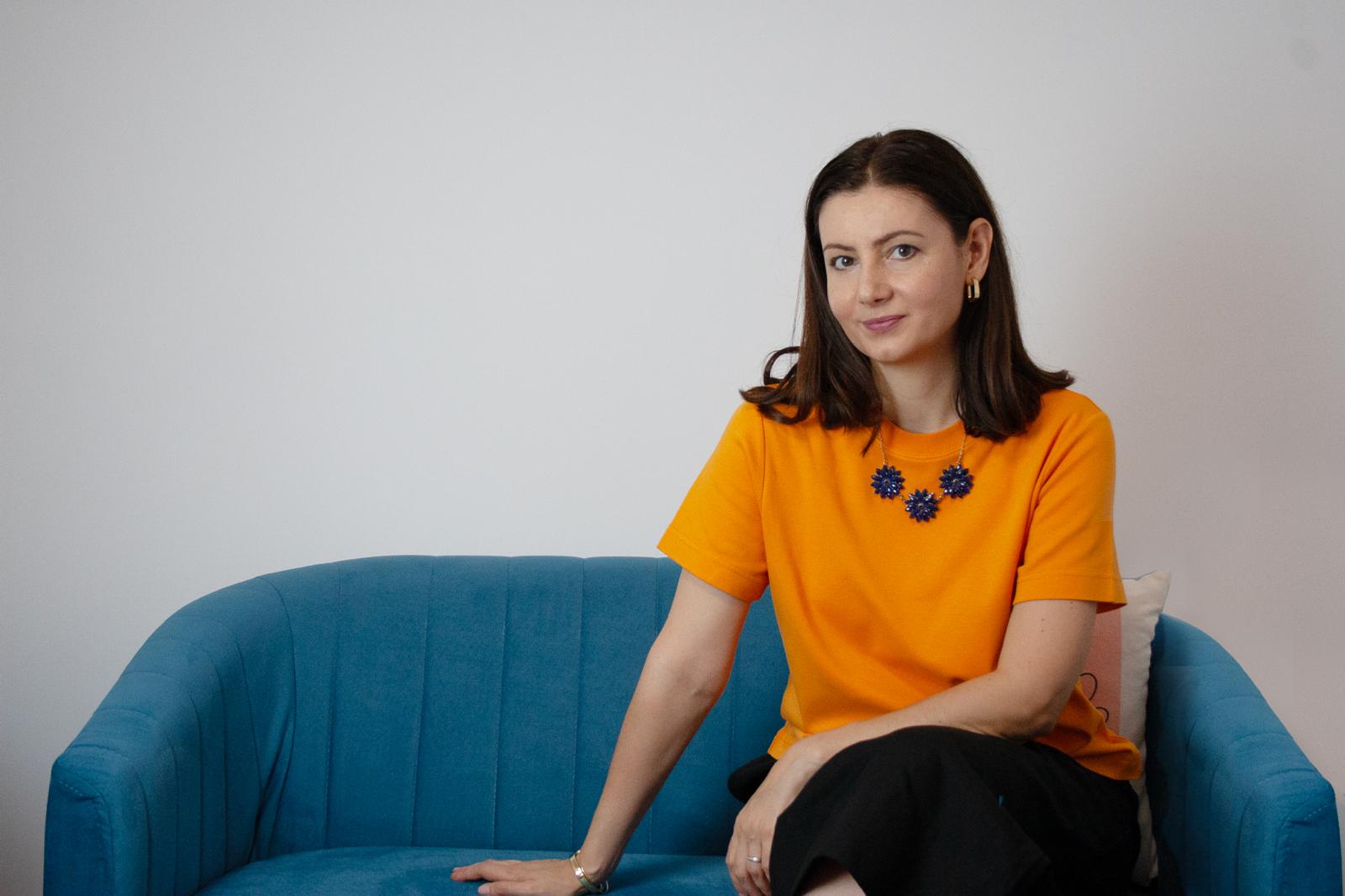
There are people who enter your life quietly, in the best possible way. Mihaela Nicolaescu is one of those people for me.
I first heard her name through her husband, Dragoș, who became one of my most important mentors at a pivotal crossroads in my life. It was the moment I made one of the bravest decisions I've ever made: walking away from the security of the corporate world to build something entirely my own. That kind of leap requires people who believe in you before you fully believe in yourself. Dragoș was one of those people, and through him, I found my way to Mihaela.
Over time, she became a dear friend, the kind you can call with both your victories and your fears, knowing you'll be met with the same warmth, wisdom, and honesty. So, when I sat down to think about the first voices I wanted to bring into Blagasphere, and soon, my upcoming podcast, “What’s Your Real Story”, Mihaela came to mind immediately.
Because here's what you need to know about her: Mihaela Nicolaescu (www.mihaelanicolaescu.ro) is a psychotherapist with a rich and courageous story of her own. She chose her path not once, but twice: first following a career in project management, then returning to her first love: psychology and human connection. She works with people who are stuck, lost, or carrying weight they can't quite name. And she does it with a depth that only comes from having faced your own turning points.
In this interview, Mihaela talks about resilience, about the moment she drove a car alone for the first time and felt freedom, about a childhood relationship with her father that she had to grieve in order to survive, and about the invisible patterns that quietly rule so many of our lives.
This is the kind of conversation I want more of. The kind that reaches past the polished surface and into the real stuff.
I hope it reaches you wherever you need it most, today.
Take us back to a turning point in your life—one moment that quietly (or loudly) changed your direction. What happened?
The moment that truly shifted my direction was leaving home at 18. I moved 500 kilometres away from home for university, which meant 12-hour train rides and only seeing my family during major holidays. Living in a dorm with four other students for four years was a unique challenge. It wasn't always easy and I had to learn fast how to handle life's hurdles on my own.
Looking back, I realize how much that time shaped me. It taught me resilience, self-reliance, and the importance of building connections with people from all walks of life. While it was overwhelming at times, it was also an incredibly rewarding experience, marking the beginning of my independence and adulthood. I have never returned to live with my parents ever since.
Was there a version of you that almost chose a completely different path? What stopped you—or what pulled you back?
After graduating from university, I moved to Bucharest and began a career in project management, following my Master's in European Affairs. While I enjoyed the work for several years, I eventually felt a longing for a deeper impact. I wanted to work closely with people, to help others suffer a little less. This, for me, meant contributing to something real.
So I decided to return to my first love—psychology. After I did my first training in Solution-Focused Brief Therapy and got my license, I could finally do psychotherapy, the work I've always wanted.
Do you remember a situation where you had to choose courage over comfort? What did that look like in real life?
A situation where I had to choose courage over comfort very clearly was when I started learning to drive. Even though I already had my driver's license, I was afraid to actually drive. To push myself, I even bought a car—but the fear of driving alone held me back. I kept waiting for my husband to find the time to come with me, but his busy schedule made this difficult.
One day, I was feeling incredibly frustrated. There I was, with a car ready and waiting for me, yet I felt stuck, unable to take that first step. That's when I made the decision to face my fear. I got in the car and started driving by myself, just on the streets close to my house at first. It was a small but important step. Over time, I gained confidence and began driving on larger streets and in more challenging situations.
Instead of waiting for the 'perfect' circumstances or relying on someone else to make me feel ready, I decided to take action—even though it felt scary. Now, I love driving, and I look back on that moment as a reminder of how powerful it is to step out of your comfort zone.
What's a small, unexpected moment that brought you real happiness recently?
I recently returned from a trip to Nice which I visited with a friend. I truly enjoyed every moment of it. One afternoon, we set out to watch the sunset on the beach—but it started to rain, so we decided to head back to our hotel. Along the way, a gentleman walking from the opposite direction told us: 'Look, over there!' We turned around to see a massive, stunning rainbow stretching across the sky. It was so unexpected and brought me such pure joy in that moment!
Is there a belief you once held strongly that you've completely changed your mind about? What shifted?
I once believed that you must maintain close ties with your family of origin at any cost. While I still value those bonds, I no longer see them as a universal obligation. I am referring here to my relationship with my father, which was particularly challenging. I always held out hope that as he got older, he'd soften—but his own inner struggles made him push away anyone who didn't see things his way.
The real turning point for me was when I realized I could maintain a compassionate view of him from a distance, without allowing his choices to impact my well-being and my life. This process of differentiation was a major shift. And even though it brought a real sense of loss in the beginning, once I found my balance I finally felt free to be myself.
In your work, can you share a story of someone who came to you feeling stuck—and what changed for them?
Yes, of course. I am thinking of a client—a woman who struggled with a persistent pattern of postponing things that were good for her, particularly physical exercise. Being in her late forties, she wanted to have a healthy lifestyle. She used to feel energized and motivated in the afternoon, but every morning she would wake up with a physical sensation of 'heaviness' and a lack of desire to take care of herself that blocked her from following through.
In our sessions, we explored the inner logic behind this stuckness. We discovered that this 'heaviness' wasn't a lack of willpower—it was representing a child part of her that was actually punishing the adult side for feeling neglected, and was using the 'upset' as a way to make her suffering visible. Most profoundly, we found that holding onto this grudge was her only way to maintain a connection with her mother, who had been emotionally dismissive throughout her childhood. To the client, letting go of this heaviness meant facing the unbearable reality of being 'all alone.'
The shift occurred when she stopped trying to force discipline and instead became present to that younger part of herself. In the therapeutic process, she was able to acknowledge the deep need for her mother without 'doing something about it.' By the end of therapy, she reached a state of acceptance where she realized she no longer needed her mother to see or care for her in order to reclaim her agency and take care of herself.
What's a pattern you keep seeing in people's struggles that most don't even realize they have? When did you first notice it?
One pattern many people struggle with—most of the time without realizing it—is the tendency to push away difficult thoughts and feelings. However, the more energy they spend avoiding discomfort, the more power it gains over their lives. What we resist, truly does persist.
Think of someone who feels lost right now—what would you tell them, based on a moment from your own life, not just theory?
To anyone feeling lost right now, I want to say this: never lose hope and don't let go of your trust in God—or whatever higher power or purpose gives you strength. We all hit those low points, but they don't have to lead to despair.
I'd also tell you to reach out. When we feel lost, our first instinct might be to withdraw or isolate ourselves. But we are biologically and emotionally wired to seek connection, especially in hard times. Surround yourself with people who genuinely care about you—family, friends, even mentors. These connections can anchor you when you feel adrift. Sometimes, just knowing someone is there to listen, without judgment, can be enough to help you take the next step.
Seeking professional help from a therapist or counselor can also be an incredibly powerful step toward understanding your emotions and finding clarity. Therapy isn't just for when things are 'bad'—it's a safe space to explore what you're going through and how to move forward.
Ground yourself in what you know to be solid in your life. This could be your faith, your values, or even small daily routines that bring you comfort. For me, prayer has been a source of immense peace. I live by the words Nihil sine Deo—'nothing without God.' These words remind me that we are much more than the reflection we see in the mirror. We are beings of purpose, resilience, and strength—even when we don't feel that way.
In my own life, I've faced moments of deep struggle. One particularly difficult time stands out. Back then, I didn't know what to do or how to move forward. Thankfully, I was living with a close friend at the time and she stepped in to help. Together, we made a plan. We started attending dance classes together, spent more time in nature, and worked on finding a job. She reminded me that I wasn't alone and assured me of her support until I could stand on my own again. That experience taught me the importance of taking action—even small steps—and leaning on the people who care about you.
Give yourself permission to feel what you're feeling. Your emotions are valid, and there's no need to rush through them. Healing takes time, and there's no one-size-fits-all solution. For some, it might be spiritual practices. For others, it might be therapy, leaning on loved ones, or simply taking life one day at a time. Whatever path you take, trust that you'll find your way again. You are not alone in this journey.
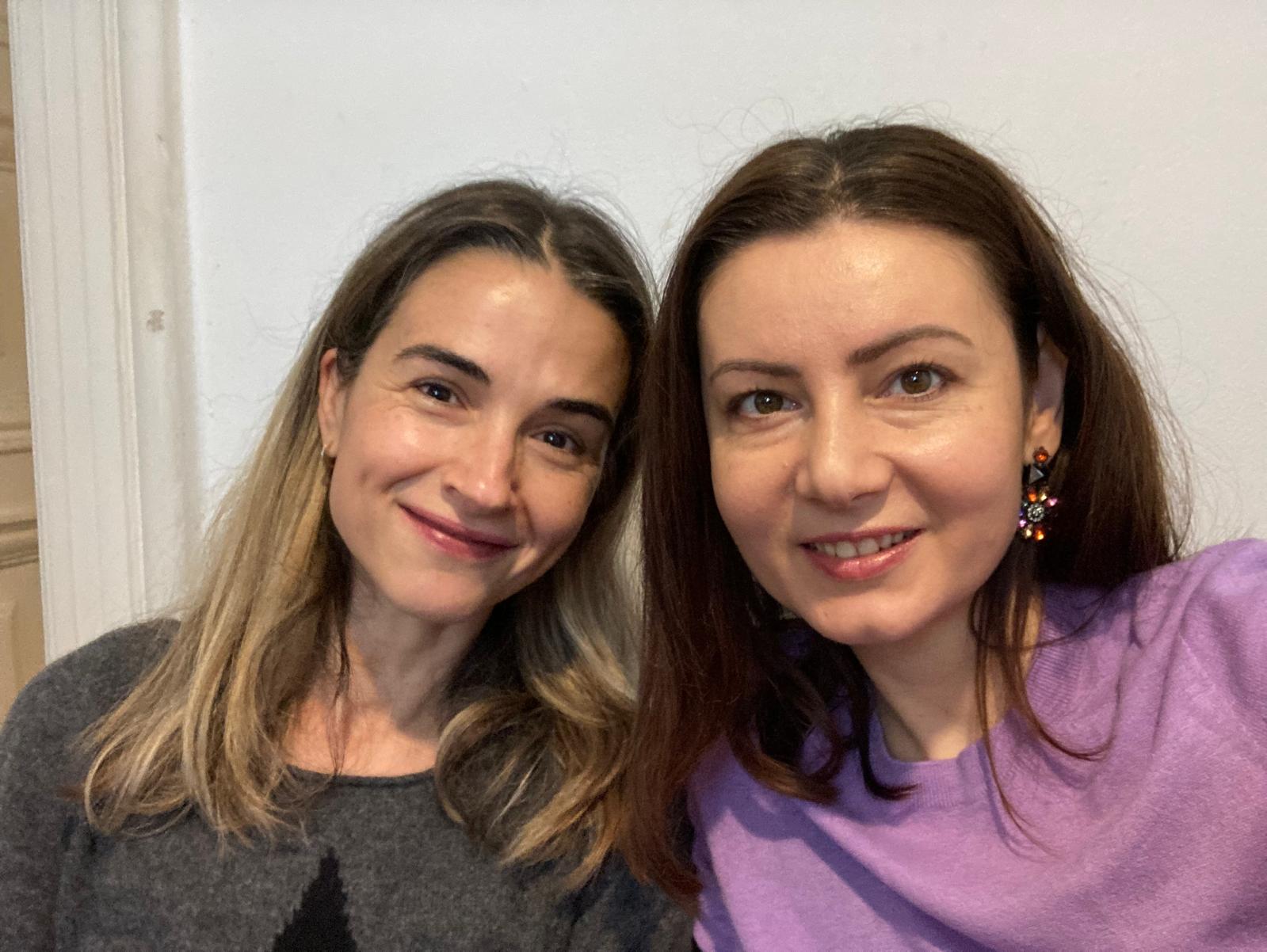
What struck me most in this conversation was the image of her getting into that car alone. That is what courage looks like most of the time: quiet, private, and transformative precisely because no one else gave you permission to do it.
And I'll be honest with you, because this space has always been one for authenticity: I got my driving license in August 2018. And I have not driven since. Fear has a way of making itself very comfortable in the passenger seat. Yet hearing Mihaela's story stirred something in me. This summer, I am going to drive. God helps!
It also moved me deeply to hear her speak about her father, and about the freedom that came not from fixing the relationship, but from releasing the obligation to fix it. That kind of grief is rarely talked about, and yet it is one of the most courageous acts of self-love there is.
Mihaela and I share a deep belief: that people are not broken. They are carrying unfinished stories. And with the right support—whether it's therapy, coaching, community, or simply a friend who refuses to let you disappear—those stories can evolve.
This conversation is exactly the kind I want to keep having, and soon, I'll be having them live. My podcast, “What’s Your Real Story?” is coming, and conversations like this one with Mihaela are precisely what it will be built around: real people, real turning points, and the courage it takes to keep going. If you don't want to miss it, make sure you're subscribed to my newsletter, you'll be the first to know when it launches.
In the meantime, if Mihaela's words resonated with you and you'd like to explore therapy or know someone who might benefit from her work, I encourage you to reach out to her directly.
And if something in this interview stirred something in you, maybe a fear you've been circling, a decision you've been postponing, a conversation you've been avoiding, perhaps that's worth paying attention to.
Courage just waits for you to take the first step.
With love and courage,
GabriEla
📩 Subscribe to Gabriela's Substack to be the first to know when “What’s Your Real Story” launches.